Should Investors Stop Systematic Investment Plans During Bear Markets or Increase Them?
Why market crashes test investor discipline more than investor knowledge
A bear market is a test for investors. The prices of stocks fall. The value of investment portfolios goes down. News channels start talking about how bad things are. Social media is filled with negative stories. Many investors who were feeling confident start asking the same question:
Should I stop my Systematic Investment Plan until the market gets better?
Some people ask the opposite question:
Should I invest even more money during the crash?
This kind of discussion happens every time the market has a correction. It happened during the 2008 financial crisis, the COVID crash of 2020 and every other major drop in between. When the market is falling investors start questioning their long-term plans.
The answer to what investors should do is not based on emotions. It is based on understanding how Systematic Investment Plans actually work during bear markets.
What Happens to Systematic Investment Plans During a Bear Market?
A bear market is when the stock market falls by 20% or more from its recent high. During this time:
- Stock prices go down
- The value of funds goes down
- Investors get scared
- The market becomes more volatile
- The media becomes extremely negative
For investors who have a Systematic Investment Plan this means the value of their investment portfolio may go down temporarily even if they continue investing every month. This can feel scary because people think they are losing money.
Systematic Investment Plans work differently from investing a lump sum amount.
When the value of the fund goes down the same amount of money buys more units.
For example:
January — ₹100 NAV — ₹5,000 Investment — 50 Units
February — ₹80 NAV — ₹5,000 Investment — 62.5 Units
March — ₹60 NAV — ₹5,000 Investment — 83.3 Units
As the price falls the investor gets more units.
This is called rupee cost averaging, which is one of the biggest advantages of Systematic Investment Plans.
Why Most Investors Stop Systematic Investment Plans During Crashes
Even though Systematic Investment Plans are designed to handle volatility many investors still stop them during market crashes.
This happens because people's emotions are often stronger than logic.
Investors usually stop Systematic Investment Plans because:
- They are scared of losing money
- They think the market will keep falling
- They want to wait until the market becomes stable
- They lose confidence after seeing negative returns
- They compare themselves to others who exited the market early
The problem is that the market usually recovers before people's emotions recover.
By the time investors feel comfortable again the market is often already much higher.
This creates a common pattern:
- Investors continue their Systematic Investment Plans during good times
- The market crashes
- Fear increases
- Investors stop their Systematic Investment Plans
- The market recovers
- Investors start their Systematic Investment Plans again at higher prices
This hurts the long-term benefits of Systematic Investment Plans.
Systematic Investment Plans Actually Work Better During Bear Markets
Many people think Systematic Investment Plans work best when the market is rising. In reality Systematic Investment Plans can become even more powerful during bear markets.
Why?
Because bear markets allow investors to buy more units at lower prices.
When the market eventually recovers those low-cost units can generate strong long-term gains.
Many investment platforms and mutual fund studies show that continuing Systematic Investment Plans during downturns can improve long-term returns and help investors benefit from the eventual recovery.
This is why experienced investors often see crashes differently from beginners.
Beginners see falling prices as danger.
Long-term investors see falling prices as discounts.
Should Investors Increase Systematic Investment Plans During Bear Markets?
For investors who have stable income, strong emergency savings and a long investment horizon increasing Systematic Investment Plans during bear markets can be very beneficial.
Because during crashes:
- Good companies become cheaper
- Stock valuations fall
- The potential for long-term returns improves
- Future recovery gains can become larger
Historically some of the best long-term returns have come from investments made during periods of fear and pessimism.
That does not mean investors should put all their money into the market during every correction. But bear markets can create opportunities that are not available during bull markets.
Some investors use:
- Increasing their Systematic Investment Plan amount
- Making additional lump sum investments
- Temporarily increasing their allocation to stocks
- Taking advantage of lower prices
to benefit from the market recovery later.
Increasing Systematic Investment Plans Is Not Always Right for Everyone
There is an important difference here.
Continuing Systematic Investment Plans is usually a good idea for most long-term investors.
Increasing Systematic Investment Plans is usually suitable only if:
- The investor has stable income
- The investor already has emergency savings
- The investor can manage debt properly
- The investor has a long investment horizon
- The investor can handle market risk emotionally
If someone is struggling financially or emotionally forcing themselves to invest more money may create panic later.
In investing it is more important to survive than to be perfect.
A small Systematic Investment Plan continued consistently is usually better than an aggressive one that gets stopped midway.
The Biggest Mistake: Trying to Time the Market
Many investors stop Systematic Investment Plans because they think they can restart them at the perfect time.
The problem is that almost nobody can consistently predict when the market will recover.
Markets recover unpredictably.
Some of the strongest market rallies happen during periods when the news is still negative.
Missing just a few strong recovery days can hurt long-term returns significantly.
This is why disciplined investing usually performs better than emotional market timing over the long term.
Bear Markets Are Temporary. Compounding Is Permanent.
One reason Systematic Investment Plans work well over decades is the power of compounding.
Compounding depends heavily on:
- Time
- Consistency
- Staying invested
Stopping Systematic Investment Plans interrupts this compounding process.
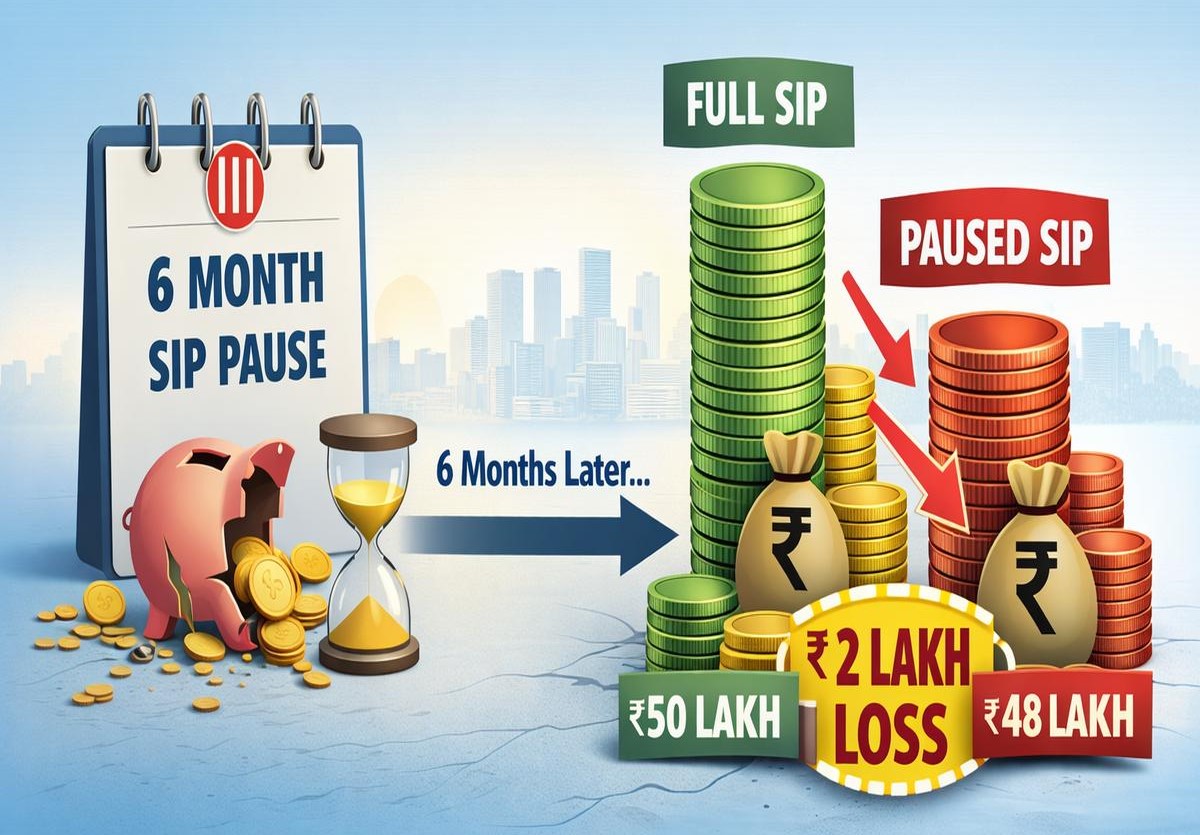
Even a few years of missed investing during market downturns can reduce future wealth significantly.
Bear markets feel like they will last forever when they happen.
Historically markets eventually recover and move higher over the long term despite crashes, recessions, wars, inflation and global crises.
The investors who benefit the most are usually those who stayed invested while others panicked.
What Smart Investors Usually Do During Bear Markets
Experienced long-term investors often follow a few simple principles during crashes:
- Continue existing Systematic Investment Plans
- Increase Systematic Investment Plans if financially comfortable
- Ignore short-term portfolio declines
- Focus on proper asset allocation
- Maintain emergency funds
Investors should never depend on equity investments for short-term survival money.
When Stopping Systematic Investment Plans May Actually Make Sense
There are situations where pausing Systematic Investment Plans may be reasonable:
- Job loss
- Medical emergencies
- High-interest debt burden
- Lack of emergency savings
- Financial instability
In such cases financial survival becomes more important than investment discipline.
This is very different from stopping Systematic Investment Plans simply because the market is falling.
Stopping investments because of fear alone is usually emotional investing, not rational investing.
The Real Purpose of Systematic Investment Plans
Many people misunderstand Systematic Investment Plans.
Systematic Investment Plans are not designed to avoid volatility.
They are designed to help investors survive volatility.
The entire Systematic Investment Plan structure exists because markets are unpredictable.
If markets only went up smoothly Systematic Investment Plans would not even be necessary.
Bear markets are not failures of Systematic Investment Plans.
They are the environments where Systematic Investment Plans show their true strength.